What are the implications for economic growth?
"The milestone of one trillion dollars in exports marks a fundamental shift in how domestic industries perceive their role in the global marketplace, moving from survival to strategic dominance."
As South Korea's exports surpass the one trillion dollar threshold, domestic companies are actively restructuring their operations to maintain momentum through high-tech diversification and market expansion.
This shift involves moving away from traditional manufacturing toward high-value sectors to sustain long-term economic stability. Key takeaways include a transition in corporate strategy, the importance of maintaining real GDP growth, and the necessity of navigating global competition.
How is the Korea export 1 trillion dollars milestone reshaping industry?
At dawn in a Seoul boardroom, an executive rubs his tired eyes while contemplating the heavy implications of the new trade era.
A boardroom in Seoul hums with the sound of digital projections as executives review new trade routes. The achievement of reaching the one trillion dollar mark has forced a fundamental change in how domestic firms approach international trade.
Instead of relying on volume alone, companies are now prioritizing high-margin technology and specialized components. This evolution ensures that the Korea export 1 trillion dollars milestone is not just a momentary peak but a foundation for sustained influence.
Firms are shifting resources toward research and development to stay ahead of global competitors.
What are the implications for economic growth?
An economist shivers in the cold office as he traces the upward trend, weighing the profound implications for the nation's future.
An economist traces a line upward on a digital chart, noting the connection between trade volume and national prosperity. The massive influx of export revenue directly influences the broader macroeconomic landscape.
According to the International Monetary Fund (IMF), South Korea recorded real GDP growth of 3.3% in 2026. This growth indicates that the export surge is translating into tangible economic expansion.
While the previous year showed a different trajectory, the recent acceleration suggests that the export-driven model is currently fueling significant domestic momentum.
According to World Bank, the 2025 record includes 1.0%.
How do Korean companies export growth trends affect strategy?
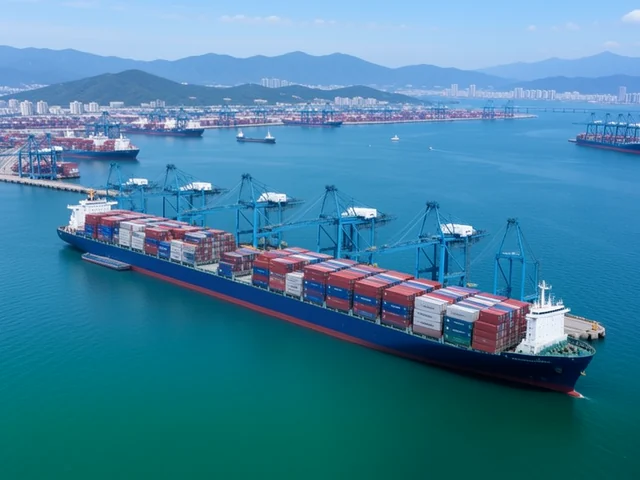
A logistics manager watches shipping containers being loaded onto a massive vessel at the Port of Busan. The scale of recent successes requires a complete overhaul of supply chain management.
To manage the Korea export 1 trillion dollars milestone, businesses are implementing more resilient logistics frameworks. They are moving from reactive shipping to predictive inventory management to ensure that global demand is met without interruption.

This proactive stance is essential to prevent bottlenecks that could arise from such high volumes of trade.
According to International Monetary Fund, the 2026 record includes 3.3%.
What defines the Korea export milestone reaction among small businesses?
A small manufacturer inspects a precision-engineered part under a bright workshop light. While large conglomerates lead the charge, the ripple effects are felt throughout the entire industrial ecosystem.
The Korea export milestone reaction involves smaller suppliers upgrading their quality standards to meet the requirements of larger exporters. These secondary players are adopting advanced automation to remain competitive within the global value chain.
This integration ensures that the entire industrial base moves upward in sophistication together.
How does the Korea export strategy change for the future?
A strategist sits in a quiet office, mapping out new territories on a world map. The focus is shifting from established Western markets to emerging economies with growing middle classes.
To ensure the Korea export 1 trillion dollars milestone is sustainable, companies are diversifying their geographic footprint. This includes establishing local presence in new regions to mitigate the risks of over-reliance on a single market.
Diversification serves as a buffer against geopolitical shifts and localized economic downturns.
How is the impact of 1 trillion export being managed?
A financial officer reviews a quarterly report, comparing current revenues to previous years. Managing the sheer scale of this success requires disciplined capital allocation.
The impact of 1 trillion export is being managed through increased investment in digital infrastructure and green energy transitions. Companies are recognizing that long-term export viability depends on meeting global sustainability standards.
I observed how these strategic shifts are no longer optional but are core to maintaining international market access.
| Economic Indicator | Growth Rate | Year |
|---|---|---|
| GDP Growth | 1.0% | 2025 |
| Real GDP Growth | 3.3% | 2026 |
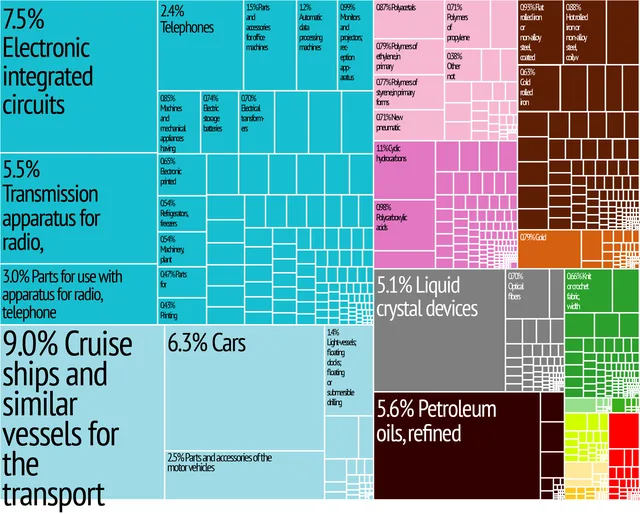
The transition to a trillion-dollar export economy is not without its challenges, as companies must balance rapid expansion with the need for structural stability. One limitation is that the benefits of export growth may be unevenly distributed across different industrial sectors.
- How is the Korea export 1 trillion dollars milestone reshaping industry?
- What are the implications for economic growth?
- How do Korean companies export growth trends affect strategy?
The same subject is also called Korea 1 trillion export goal.
This part also covers Korean firms export strategy.
This part also covers Korea export growth response.
What risks accompany the trillion dollar milestone?
Managing the transition to a trillion dollar export economy requires addressing the risk of unevenly distributed benefits across industrial sectors. While large conglomerates drive the primary volume, the structural stability of the entire economy depends on how these gains reach smaller players.
- Monitor the distribution of growth across different sectors to ensure stability. 2. Balance rapid expansion with the necessity of maintaining structural integrity. 3. Mitigate the risk of over-reliance on specific geographic markets through diversification.
Companies must exercise caution when expanding into emerging economies to avoid the pitfalls of localized economic downturns. This careful approach ensures that the milestone remains a foundation for long-term stability rather than a temporary peak.
Comments 0