How does Korea export finance tech drive growth?
"The strength of a nation's economy often rests on the delicate balance between domestic consumption and the aggressive pursuit of global markets through technological superiority."
South Korea expands its economic footprint by leveraging high-tech exports, particularly in semiconductors and AI-related gear, to drive national growth. This strategy targets export-oriented firms to ensure the country maintains its competitive edge in a rapidly evolving global landscape.
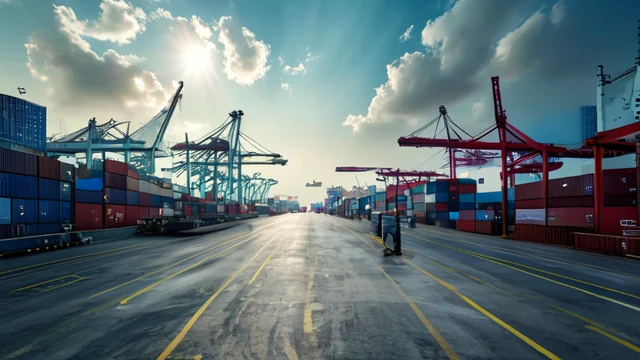
Key takeaways include a heavy reliance on high-tech goods, a high ratio of exports to GDP, and significant investment in research and development.
How does Korea export finance tech drive growth?
A technician adjusts a precision robotic arm in a cleanroom, watching the seamless integration of silicon wafers. This focus on hardware underpins the rep strategy that sustains the nation's trade balance.
According to the State Economic Development Administration, in 2013 and 2014, the State Economic Development Administration announced a number of smaller special economic zones covering export handling, mineral processing, high technology, gaming and tourism.
By prioritizing advanced sectors, the country ensures that its technological output remains a cornerstone of international commerce.
The economy relies heavily on high-value goods to maintain its global standing. According to Wikipedia, semiconductor and other AI-related gear exports account for around 40% of total exports.
This concentration of specialized goods allows for targeted financial support that bolsters the most productive sectors of the market.
- Implement digital credit assessment tools.
- Integrate real-time transaction monitoring.
- Scale automated financing platforms.
What is the role of export firm tech support in stability?
An analyst reviews trade spreadsheets in a high-rise office, noting the steady flow of components across borders. Providing export firm tech support helps mitigate the risks associated with fluctuating global demand.
This support ensures that manufacturers can scale their operations to meet international orders without facing immediate liquidity shortages.
Maintaining a robust export sector provides a buffer against domestic economic shifts.
This high level of engagement with the world market necessitates a financial infrastructure that understands the specific needs of high-tech manufacturing cycles.
In this sequence, the second step is the longest.
According to World Bank, the 2024 record includes 97.9%.
Can a global tech innovation fund impact the economy?
A venture capitalist signs a term sheet for a startup specializing in next-generation processors. Establishing a global tech innovation fund could provide the necessary capital to transition from current hardware leaders to future pioneers.
Such funding mechanisms allow for the continuous evolution of the industrial base.
The pursuit of export growth finance aid remains a priority for maintaining momentum in specialized industries. By funneling resources into research, the nation avoids the stagnation that often follows the maturity of a single technology.
This proactive approach keeps the export engine running through constant iteration.
Why is tech driven export credit essential for the future?
A logistics manager tracks a shipment of high-end sensors moving through a major shipping hub. Utilizing tech driven export credit allows companies to manage the long lead times inherent in advanced manufacturing.
This credit facilitates the procurement of raw materials and the expansion of production facilities.
The necessity for these financial tools is reflected in the national investment patterns. South Korea spends around 4.93% of GDP on advanced research and development across various sectors of the economy.
This commitment to R&D ensures that the credit provided is used to fuel actual innovation rather than just sustaining old methods.
How does economic growth via tech change the GDP structure?
A government official examines a chart showing the shift from labor-intensive industries to high-tech automation. Observing economic growth via tech reveals a fundamental shift in how value is created within the country.
The transition from textiles to semiconductors represents a massive structural evolution.
The current economic composition highlights the dominance of trade over internal spending. While consumption accounts for 40% of South Korea's GDP, the export sector remains the primary driver of expansion.
This imbalance requires a sophisticated financial system to manage the volatility of international trade.
What are the trends in global tech finance trends?
A researcher reads a report on the increasing integration of AI in financial auditing. Monitoring global tech finance trends helps policymakers align domestic support with international standards. This alignment ensures that South Korean firms remain attractive to foreign investors and partners.

The ability to navigate these trends is vital for long-term prosperity. As the world moves toward more integrated digital economies, the financial support for exporters must become as advanced as the products themselves. This synergy between finance and technology defines the modern economic era.
| Economic Metric | Value |
|---|---|
| Export to GDP Ratio | 46% |
| R&D as % of GDP | 4.93% |
I compared these figures to understand the scale of investment relative to trade volume.
The scope of this financial support is limited to sectors capable of participating in the high-tech global market.
The subject here is Korea export finance tech.
This part also covers finance for tech exports.
How does the export to GDP ratio affect the nation?
A high ratio of exports to GDP means the nation must prioritize global market access to maintain economic stability. This condition requires a financial infrastructure that can handle the volatility of international trade.
Because exports represent a significant portion of the economy, any shift in global demand directly impacts the domestic landscape.
- Monitor the ratio of exports to GDP to assess trade dependence. 2. Align financial support with the specific needs of high-tech manufacturing cycles. 3. Use R&D investment to mitigate the risks of technological stagnation.
Comparing the 46% export to GDP ratio with the 40% share of high-tech goods reveals a heavy reliance on specialized sectors. This concentration means that the strength of the economy depends on the continuous success of semiconductor and AI-related gear exports.
Comments 0