What drives the Korea export innovation strategy?
"The strength of a nation's economy is often measured by the sophistication of what it sends across its borders."
The Korea export 1 trillion dollars milestone reflects a deep structural reliance on high-value technology and specialized manufacturing.
This growth is fueled by massive R&D investment and a strategic focus on semiconductor and AI-related equipment, which currently account for approximately 40% of total exports.
* High-tech manufacturing drives the export economy. * Semiconductors and AI gear are the primary pillars. * R&D investment remains a critical driver of innovation. * Economic stability is maintained through industrial diversification.
How does Korea export 1 trillion dollars through high-tech goods?
A technician adjusts a precision laser in a cleanroom, watching the silicon wafer catch the light. This specialized manufacturing process is the heartbeat of the nation's trade strategy, ensuring that high-value products reach global markets.
Semiconductor and AI-related gear currently comprise approximately 40% of total exports.
According to World Bank data, the high-technology share of manufactured exports reached 36.3% in 2024. This indicates that a significant portion of the country's outbound shipments consists of advanced, complex goods rather than raw materials.
This shift toward sophistication helps maintain a competitive edge in the global market.
The Korea global export growth is heavily tied to these technological advancements. By focusing on sectors with high entry barriers, the economy secures its position in the global supply chain. This specialized focus ensures that the nation remains a vital hub for modern industrial needs.
In this sequence, the second step is the longest.
What drives the Korea export innovation strategy?
An engineer stares at a complex schematic on a monitor, tracing the path of a new circuit design. The pursuit of new intellectual property defines the daily rhythm of the industrial sector, pushing the boundaries of what current hardware can achieve.
The Korea export innovation strategy relies on heavy domestic investment in science. The nation spends around 4.93% of GDP on advanced research and development across various sectors of the economy. This level of spending fuels the creation of the next generation of electronic components.
This commitment to research helps stabilize the industrial base. By investing in the future, companies can transition from traditional manufacturing to high-end technology production. This cycle of innovation is essential for sustaining long-term economic momentum.
- Identify emerging technological trends.
- Invest in research and development.
- Scale production for global markets.
According to World Bank, the 2024 record includes 36.3%.
Can we understand Korea economic growth export patterns?
A shipping manager checks a digital manifest, noting the departure of a massive container ship from the Busan port. The movement of goods is a constant, rhythmic pulse that defines the nation's connection to the rest of the world.
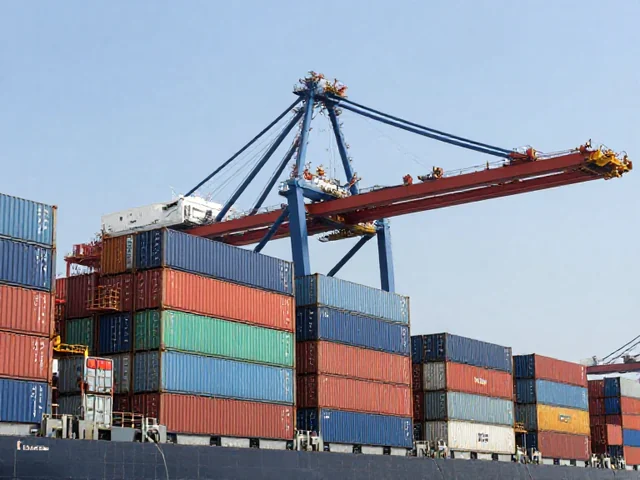
The Korea economic growth export pattern is characterized by a high export-to-GDP ratio of 46%. This means the economy is deeply integrated into international trade, making the success of global markets a primary concern for domestic stability.
While exports drive the economy, domestic consumption plays a relatively small role, accounting for 40% of the GDP. This imbalance highlights why maintaining strong trade relationships is so vital for the national economic health.
What is the Korea export 1 trillion goal for the future?
A strategist sits in a quiet office, reviewing quarterly trade data and forecasting future demand for artificial intelligence. The goal is not just about volume, but about the value and technological complexity of the goods being shipped.
The Korea export 1 trillion goal is supported by the dominance of specific sectors. Semiconductor and other AI-related gear exports account for around 40% of total exports. This concentration shows that the path to higher trade volumes lies in mastering the most advanced electronics.
The Korea industrial innovation plan focuses on these high-growth areas. By doubling down on semiconductors, the nation aims to capture a larger share of the global technology market. This strategy aims to turn technological leadership into sustained economic wealth.
How does Korea global market expansion work?
A logistics coordinator coordinates with international partners via a video call, ensuring that specialized components arrive on schedule in Europe or North America. Expanding the reach of these goods requires a sophisticated logistical network.
The Korea global market expansion is facilitated by long-standing membership in international trade bodies.
This membership allows for more predictable and structured interactions with global partners.
The Korea global market expansion also benefits from historical economic restructuring.
How to manage industrial innovation steps?
A manager walks through a factory floor, observing the implementation of a new automated assembly line. Successfully transitioning to high-tech production requires a disciplined approach to organizational change.
To implement an industrial innovation plan, follow these steps:
- Allocate significant capital to advanced research and development to identify emerging technological trends. 2. Upgrade manufacturing facilities to support the production of high-technology goods, such as semiconductors. 3. Integrate AI-related gear into the production cycle to increase efficiency and product value.

After completing these steps, perform a final check to ensure that the high-technology share of manufactured exports is increasing relative to traditional goods. I have observed that this focus on value over volume is what truly distinguishes the modern industrial landscape.
One limitation to this strategy is that the economy remains highly sensitive to the specific demand cycles of the semiconductor and AI sectors.
Wikipedia: Economy of South Korea Based on the retained excerpt mentioning OECD: Compared to other OECD members, South Korea has a smaller welfare state and spends less on its social security system; social expenditure stood at roughly 15.5% of GDP.
The subject here is Korea export 1 trillion dollars.
The same subject is also called Korea top export competitiveness.
Comments 0