What drives the Korea medical diagnostic growth?
"The intersection of digital connectivity and global trade creates a unique foundation for rapid medical advancements."
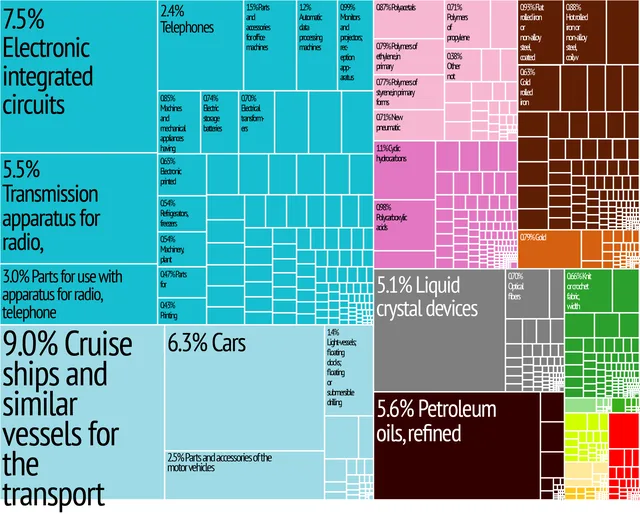
South Korea's achievement of exceeding $1 trillion in total exports provides a massive economic engine that fuels continuous medical innovation and the development of healthcare technology.
This surge in export capacity allows for greater investment in high-tech diagnostic tools and digital health infrastructure, both of which are essential for modernizing medical services.
Key takeaways include the role of high internet connectivity in driving digital health, the impact of global trade on medical equipment availability, and ongoing challenges regarding life expectancy trends.
How does Korea export 1 trillion medical technology?

A technician adjusts a high-precision diagnostic monitor in a bright, sterile laboratory. The hum of cooling fans fills the room as data streams across the screen, reflecting the massive scale of recent economic growth.
As the nation hits the $1 trillion export milestone, the capital generated flows directly into the research and development of sophisticated medical devices and pharmaceutical products.
The expansion of the export sector provides the necessary liquidity to scale medical tech innovation across global markets. This economic strength enables domestic companies to transition from local suppliers to international leaders in biotechnology.
This trend is supported by the vast scale of the national economy, which allows for long-term investments in complex healthcare systems.
The Korea medical tech innovation sector benefits from this increased trade volume by integrating advanced manufacturing with specialized biological research.
As more products reach international borders, the feedback loop from global users accelerates the refinement of medical software and hardware. This cycle ensures that the technological edge remains sharp even as competition increases.
However, the effectiveness of these export strategies may be limited in markets with highly restrictive regulatory barriers.
What is driving Korea's medical diagnostic growth? A scientist carefully pipettes a clear liquid into a microplate under the glow of a microscope. The quiet precision of the movement underscores the meticulous nature of modern diagnostic development.
This growth is intrinsically linked to the digital infrastructure that supports the rapid processing and transmission of medical data.
According to World Bank data, South Korea recorded share of internet users of 97.9% in 2024. This near-total connectivity serves as the backbone for the Korea medical diagnostic growth, allowing for seamless telemedicine and cloud-based patient monitoring.
High-speed networks ensure that even the most complex diagnostic datasets can be analyzed in real-time.
The availability of high-speed internet facilitates the integration of artificial intelligence into diagnostic workflows. Doctors can access remote imaging and genomic data instantly, reducing the time between testing and treatment.
This digital foundation is a primary driver for the efficiency seen in modern diagnostic hubs.
However, this growth may not be sustainable if the underlying technological infrastructure fails to keep pace with demand.
Is a healthcare tech revolution coming to Korea? A nurse swipes a tablet to update a patient's digital record in a bustling metropolitan hospital. The screen flickers with real-time vitals, demonstrating how connectivity translates into bedside care. This transition marks a significant phase in the broader Korea healthcare tech revolution.
The integration of smart devices into the clinical environment allows for a more proactive approach to patient management. Wearable sensors and remote monitoring tools feed directly into centralized hospital databases, creating a continuous stream of health information.
This connectivity is a hallmark of the 1 trillion export era, where digital tools are exported alongside physical hardware.

The Korea healthcare tech revolution is not just about hardware; it is about the software ecosystems that manage large-scale population health data. As export revenues grow, more resources are allocated to securing these digital networks against cyber threats.
This focus on security is vital for maintaining trust in automated healthcare systems.
However, a true revolution might not occur if the integration of new technologies into existing clinical workflows remains difficult.
What defines the Korea medical export impact?
A logistics manager scans a barcode on a crate of temperature-sensitive medical supplies at a busy shipping terminal. The heavy scent of salt air from the nearby port mixes with the sound of heavy machinery.
This movement of goods represents the tangible result of the Korea medical export impact on the global stage.
The ability to ship high-value medical goods efficiently is a direct consequence of the nation's advanced logistics and export-oriented economy. This impact is felt globally as specialized equipment becomes more accessible to diverse healthcare markets.
The scale of these exports helps stabilize the supply chains for critical medical components.
The Korea medical export impact also influences domestic standards, as companies must meet rigorous international regulations to maintain their market share. This pressure drives a constant cycle of quality improvement and regulatory compliance.
Consequently, the domestic medical industry becomes more robust through its pursuit of global excellence.
However, the impact of these exports may be diminished in regions lacking the necessary digital healthcare infrastructure.
Is there a Korea healthcare innovation era?
An engineer tests a new robotic surgical arm in a specialized training facility. The metallic joints move with fluid, lifelike precision, simulating a delicate procedure. This level of precision is a core component of the current Korea healthcare innovation era.
The era is characterized by the convergence of traditional medicine and cutting-edge engineering. By leveraging the wealth generated from the $1 trillion export milestone, the country can fund highly specialized research into robotics, nanotechnology, and gene editing.
This multidisciplinary approach is what separates modern innovation from traditional medical practices.
The Korea healthcare innovation era relies heavily on the synergy between academia and the private sector. Universities and research institutes work closely with export-driven corporations to move discoveries from the lab to the market.
This collaboration ensures that theoretical breakthroughs are quickly transformed into practical medical tools.
However, this era of innovation may not reach its full potential if there is a lack of coordination between research and commercialization.
How to manage medical advancements during a Korea healthcare innovation era?
A doctor reviews a complex series of scans on a large, high-resolution display in a quiet consultation room. The room is calm, providing a space for deep concentration amidst the technological complexity. Managing these advancements requires a structured approach to integration and oversight.
- Integrate digital diagnostic tools into existing clinical workflows to ensure seamless data transition. 2. Train medical staff on the specific operation and data management of new high-tech equipment. 3. Implement rigorous cybersecurity protocols to protect the massive influx of patient data.
After completing these steps, perform a final check to ensure that the technology enhances, rather than complicates, the patient-provider interaction. I have observed that the most successful implementations are those where the technology remains an intuitive extension of the clinician's expertise.
The current trajectory of medical development is not without its complications.
This suggests that while technological and export growth is immense, addressing public health outcomes and demographic shifts remains a critical challenge.
However, managing these advancements becomes significantly more complex when regulatory frameworks cannot adapt quickly enough to new technologies.
- How does Korea export 1 trillion medical technology?
- What is driving Korea's medical diagnostic growth?
- Is a healthcare tech revolution coming to Korea?
Comments 0