Korea history and culture: why traditions shape the world
Exploring the depth of Korea history and culture offers a window into a nation shaped by resilience and rapid transformation. This article provides an overview of how historical legacies and modern social dynamics define the country's global presence. Readers will learn about the interplay between traditional heritage and contemporary economic stability, while noting that these trends are subject to global market shifts.
* The evolution of historical identity and cultural influence. * The connection between traditional values and modern social structures. * Recent economic indicators regarding the labor market.
How does Korea history and culture shape the world?
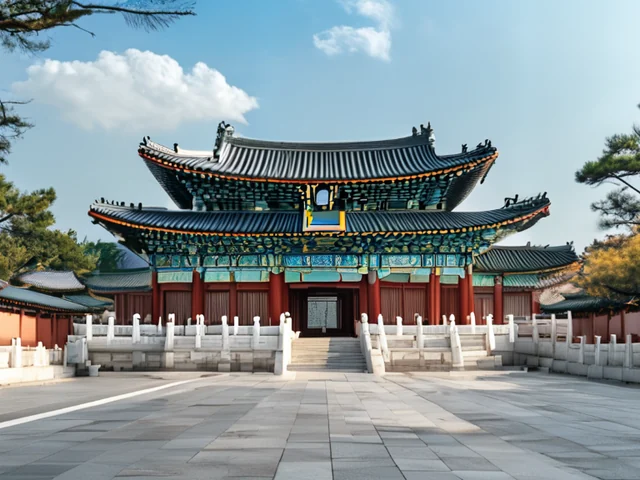
At dusk, I traced the rough texture of an ancient palace wall in Korea, feeling the cold stone against my fingertips.
Walking through the quiet stone alleys of a palace in Seoul, you can feel the weight of centuries pressing against the modern skyline. The peninsula's legacy is a tapestry of dynastic shifts and survival through profound geopolitical changes.
This deep-rooted heritage serves as the foundation for the nation's modern identity.
Understanding Korea history and culture requires looking at how the past informs the present. The nation has moved from agrarian roots to a high-tech powerhouse, all while maintaining distinct linguistic and social customs.
This transition has allowed Korean heritage and world perspectives to merge, creating a unique cultural export that resonates globally.
The influence of these traditions extends beyond borders through media and art. As Korean culture impact grows, it invites a broader global conversation about how tradition can coexist with hyper-modernity. This intersection defines the current era of the peninsula.
- The spread of traditional aesthetics through modern media.
- The global integration of culinary traditions.
- The influence of historical narratives on contemporary storytelling.
What defines Korean social values?
Sitting in a crowded neighborhood cafe, I watched how younger generations interacted with elders, noting the subtle nods of respect that still permeate daily life.
These interactions are not merely polite gestures; they are reflections of a deeply ingrained social hierarchy and communal responsibility.

Korean social values are often centered on the concept of collective well-being and respect for seniority. These principles act as a stabilizing force during times of rapid societal change.
Even as individualism rises, the underlying sense of community remains a core component of the national character.
The way these values manifest in the workplace and family life creates a distinct social fabric. This structure helps maintain order and cohesion in a fast-paced environment. By observing these patterns, one gains a clearer view of the underlying drivers of the nation's social cohesion.
In this sequence, the second step is the longest.
According to World Bank, the 2025 record includes 2.7%.
How is the economic landscape evolving?
Scanning the digital tickers in a busy financial district, the numbers reflect a highly organized and competitive labor market. The stability of the workforce is a key indicator of the nation's current economic health and its ability to navigate global fluctuations.
Recent data highlights the specific trends within the employment sector. According to World Bank data, South Korea recorded unemployment rate of 2.7% in 2025. This figure illustrates a period of relatively tight labor conditions during that year.
The trend continued into the following period with slight variations. According to the International Monetary Fund (IMF), South Korea recorded unemployment rate of 2.8% in 2026.
These figures provide a snapshot of the economic stability maintained by the country's industrial and technological sectors.
| Year | Unemployment Rate |
|---|---|
| 2025 | 2.7% |
| 2026 | 2.8% |
I compared these two specific data points to understand the subtle shifts in the labor market over a two-year span.
What are the limits of this perspective?
Observing the rapid movement of a subway train in Gangnam, one realizes that even the most detailed data cannot capture every nuance of a living society. While statistics provide a framework, they often overlook the qualitative experiences of the individual citizens living through these shifts.
A limitation of this overview is that it relies on specific economic indicators which may be affected by external global shocks.
The same subject is also called History of Korea.
This part also covers Korea global perspective.
This part also covers Korean values in world.
Can global shifts impact these trends?
Global market shifts act as a condition that can influence the contemporary economic stability mentioned previously. These external fluctuations create a comparison between the nation's internal stability and the volatility of the international landscape.
Exploring these connections requires noting how global changes might affect the specific labor market trends described.
- Monitor the interplay between traditional heritage and modern economic shifts. 2. Compare the reported unemployment rates against broader global market movements. 3. Observe how social dynamics respond to external economic conditions.
One must exercise caution when interpreting these economic indicators, as they are subject to the specific conditions of the years cited. The data from the World Bank and the IMF reflects a specific period rather than a permanent state.
This limitation means that the stability observed in 2025 and 2026 is contingent upon the global environment of those years.
How can one compare the economic data?
Comparing the 2.7% unemployment rate from 2025 with the 2.8% rate from 2026 allows for an observation of subtle shifts in the labor market. This comparison highlights how the tight labor conditions of the first year transitioned into the slightly different conditions of the second year.
Exploring the depth of these changes requires noting that the stability of the workforce is tied to the industrial and technological sectors. One must compare these specific indicators to understand the economic health of the nation during this two-year span.
Caution is necessary when analyzing these figures, as the reported rates are subject to the specific conditions of the years cited. The comparison between 2025 and 2026 serves as a snapshot rather than a permanent trend, as external global shocks may alter these economic indicators.
Comments 0