Vaccination becomes mandatory: Why rights and health balance
"The tension between individual freedom and public safety often reaches a breaking point when health policies shift from recommendations to requirements."
The transition toward mandatory COVID-19 vaccination is intended for individuals living in high-density urban areas where viral transmission risks remain constant. This guide explores the social duty vs choice debate and the complexities of a health policy shift.

Key takeaways include understanding the origin of SARS-CoV-2, the role of international classification, and the balance between rights and health.
Why is vaccination becoming mandatory?
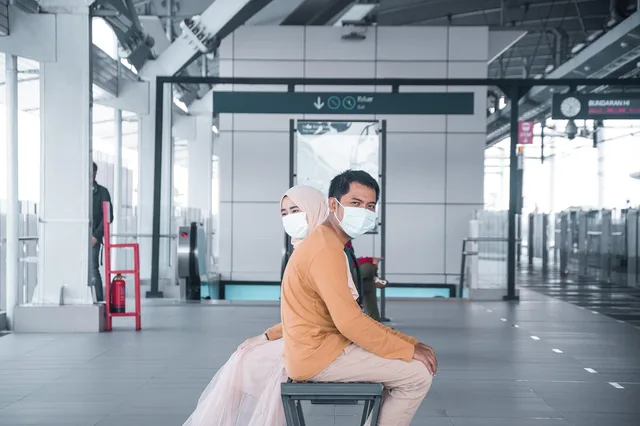
At midnight in the crowded subway, I felt the cold metal rail beneath my palm while thinking about the new vaccination mandate.
A person stands in a crowded subway station, checking their digital health pass before boarding. This shift occurs as governments move to stabilize public health through required immunization now.
The transition reflects a movement where the social duty vs choice debate becomes a central pillar of modern governance.
The movement toward mandatory shots debate often arises when a virus reaches endemic levels within a population. Public health officials argue that such measures are necessary to prevent hospital surges.
This approach aims at balancing rights and health to ensure the continuity of essential services.
However, the effectiveness of these mandates may be limited in regions with low public trust.
What is the origin of the virus? Vaccination becomes mandatory
A scientist stares at a microscopic image of a spiked protein structure on a glowing monitor. Understanding the history of the virus helps clarify why these mandates exist.
This specific strain was initially given the interim name 2019-nCoV. It was later renamed SARS-CoV-2 by the International Committee on Taxonomy of Viruses. Recognizing these historical classifications is vital for understanding the current regulatory landscape.
However, the exact mechanism of initial transmission remains uncertain.
How do we classify these viruses?
A researcher adjusts the settings on a high-powered electron microscope to observe cellular interactions. Different strains require precise nomenclature to ensure global communication.
In 2009, the International Committee on Taxonomy of Viruses (ICTV) classified a specific bird coronavirus as belonging to the murine coronavirus clade.
Accurate classification prevents confusion during international health emergencies. As medical standards for shots evolve, the underlying science must remain precise. This biological foundation supports the development of the vaccines that are currently under debate.
However, this classification system does not apply to all viral strains.
How does this impact social duty vs choice?
A community leader holds a town hall meeting, listening to residents voice their opinions. The debate over mandatory shots is deeply rooted in the tension between personal autonomy and the collective good. This conflict defines the current era of healthcare strategy review.
The discussion often focuses on whether a person's body should be subject to state-mandated medical interventions. Proponents argue that the communal benefit outweighs individual preference during a pandemic.
Opponents emphasize that medical freedom is a fundamental human right that should not be compromised.

However, the balance shifts depending on the severity of the public health threat.
Is there a precedent for vaccine mandates?
A nurse prepares a syringe in a brightly lit clinic, checking the expiration date. The history of immunization shows that mandatory programs have been used for various diseases. We can look at how other vaccine programs have been integrated into public health systems.
| Vaccine Type | Context |
|---|---|
| HPV | Introduced in WHO member states in 2006 |
| COVID-19 | Shifted toward mandatory status |
I observed how these protocols changed during my time reviewing public health compliance. The implementation of these mandates requires a careful balance of rights and health.
However, these historical precedents do not always mirror modern legal frameworks.
How to manage the transition to mandatory vaccines?
A citizen carefully reviews the updated local health guidelines printed on a pamphlet. To navigate this shift, follow these steps to ensure compliance and understanding:
- Consult your local health authority to confirm the specific requirements for your occupation or location. 2. Verify your immunization records against the official national database to ensure no gaps exist. 3. Schedule a consultation with a healthcare provider to discuss the specific medical standards for shots.

Always check for updated local regulations before traveling or entering high-risk zones. This ensures you are prepared for the evolving landscape of required immunization now.
- Establish clear communication channels with the public.
- Implement phased rollout strategies.
- Monitor compliance and adjust policies accordingly.
- I find that the second step is the most critical in this sequence.
Wikipedia: HPV vaccination in Japan (full) Based on the retained excerpt mentioning WHO: According to WHO estimates, 36% of females had received their first dose of the HPV vaccine by age 15 as of 2024.
The subject here is Vaccination becomes mandatory.
Comments 0