IMF Korea growth forecast shows 1.0% GDP growth tips guide
"The IMF's surveillance activities have a substantial impact on sovereign debt."
This analysis explores the IMF Korea growth forecast through various indicators to determine the current direction of the national economy.
Key takeaways include: 1. South Korea recorded a GDP growth of 1.0% in 2025 according to World Bank data. * Recent quarterly real GDP growth stands at 1% as of 2026Q3. * High investment in facilities and export growth are driving current trends.
##

The IMF Korea growth forecast reflects a complex interplay between declining consumption and robust investment.
At midnight in the dim office, the analyst rubs tired eyes while tracing the jagged line of the Korea growth forecast on the glowing screen.
This baseline helps set the stage for current quarterly performance. As of 2026Q3, the real GDP growth rate stands at 1% on a quarter-over-quarter basis.
How does the IMF outlook for Korea compare to other sectors? IMF Korea growth forecast
A technician adjusts a precision tool in a high-tech manufacturing facility, where production cycles are strictly monitored. The IMF outlook for Korea shows a divergence between different economic drivers.
While the overall growth remains steady, the composition of that growth is shifting. According to ECOS, the real quarter-over-quarter facility investment growth reached 4.1% in 2026Q3. Conversely, private consumption growth showed a slight contraction, recorded at -0.2% during the same period.
Why is the Korea economic growth rate tied to exports?
A cargo ship departs from a bustling port, carrying heavy containers stacked high toward international waters. The Korea economic growth rate remains heavily dependent on the movement of goods across borders.

The nation's trade-to-GDP ratio is 46%. Specifically, the real quarter-over-quarter growth for goods exports was 2.4% in 2026Q3. This reliance on external demand highlights the importance of the global trade environment for domestic stability.
According to World Bank, the 2025 record includes 1.0%.
Does the IMF predicts Korean economy trends accurately?
A policymaker reviews a thick dossier of international reports in a quiet, wood-paneled office. The IMF predicts Korean economy shifts through various surveillance activities, though these views are not without historical debate.
The IMF's surveillance activities have a substantial impact on sovereign debt, with much greater impacts in emerging than high-income economies, according to a 2021 study.
However, some leaders have challenged these assessments; for example, former Romanian Prime Minister Călin Popescu-Tăriceanu claimed that since 2005, the IMF has been constantly making mistakes when it appreciates a country's economic performances.
According to IMF, the 2011 record includes 120%.
What are the limits of the IMF analysis?

A researcher notes a specific data point in a ledger, acknowledging that no single model captures every nuance. The IMF analysis of domestic demand and international trends is subject to specific limitations.
The IMF's ability to gauge sustainable debt is a key metric, as IMF economists defined a maximum sustainable debt level of 120% in 2011. This specific threshold serves as a benchmark for monitoring the fiscal health of various polities.
How can we assess the current economic health?
A mathematician calculates the fluctuations of a cyclical index on a chalkboard. We can evaluate the current state by following these steps:
- Observe the real GDP growth rate for the most recent quarter. 2. Compare the facility investment growth against the private consumption growth. 3. Verify the export growth rate relative to the domestic demand trends.
I reviewed these specific quarterly changes to see how investment compensates for lower consumption.
One limitation of these economic assessments is that the impact of surveillance varies significantly between emerging and high-income economies.
| Economic Metric (2026Q3) | Real Growth Rate |
|---|---|
| Facility Investment | 4.1% |
| Goods Exports | 2.4% |
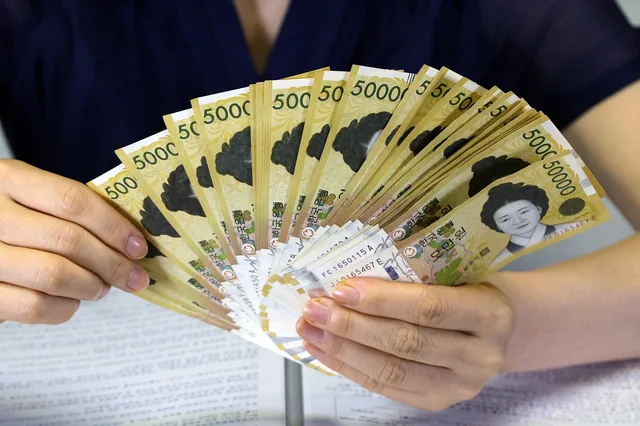
- Recent economic assessments provide a window into the fiscal trajectory of major nations.
- An analyst stares at a glowing screen, tracing the line of recent GDP figures across a digital dashboard.
- According to World Bank data, South Korea recorded GDP growth of 1.0% in 2025.
The same subject is also called Future of Korean growth.
This part also covers Global outlook on Korean trade.
This part also covers Economic development expectations now.
IMF analysis of domestic demand
How does the IMF surveillance impact sovereign debt?
IMF surveillance activities affect sovereign debt differently depending on the economic status of the nation. According to a 2021 study, these activities have a much greater impact in emerging economies than in high-income economies.
Is the 120% debt level a permanent rule?
No, the 120% debt level is a benchmark defined by IMF economists in 2011 to gauge sustainable debt. This threshold serves as a specific condition for monitoring the fiscal health of various polities.
- Compare the 1.0% GDP growth from 2025 with the 1% real GDP growth from 2026Q3. 2. Contrast the 4.1% facility investment growth with the -0.2% private consumption growth. 3. Evaluate the 2.4% goods export growth against the 46% trade-to-GDP ratio.
Comparing investment and consumption trends
Economic stability depends on the relationship between different growth drivers. A comparison of the 4.1% facility investment growth and the -0.2% private consumption growth shows how investment offsets the contraction in consumption.
This divergence is a key condition for understanding the 1% real GDP growth recorded in 2026Q3.
Assessing the impact of IMF surveillance
One must consider the economic status of a nation when evaluating the impact of IMF surveillance. Because these activities affect sovereign debt differently, the impact is much greater in emerging economies than in high-income economies.
This distinction is a critical caution for analysts monitoring fiscal health.
- Determine if the nation is an emerging or high-income economy. 2. Evaluate the potential impact of IMF surveillance on sovereign debt based on that status. 3. Monitor the 120% debt threshold as a condition for fiscal sustainability.
Comments 0