What defines the global impact of Korea trade?
"The achievement of a trillion-dollar export milestone represents a structural shift in the global supply chain, moving from simple manufacturing to high-tech integration."
Key Takeaways: 1. A fundamental shift in global supply chain dynamics. * Increased importance of high-tech industrial cooperation. * New patterns in international trade relationships.
How does the Korea 1 trillion export impact change global markets?
At dawn in the bustling port, a trader grips the cold railing as he watches a massive ship dock, a sight that defines the shift in global markets.
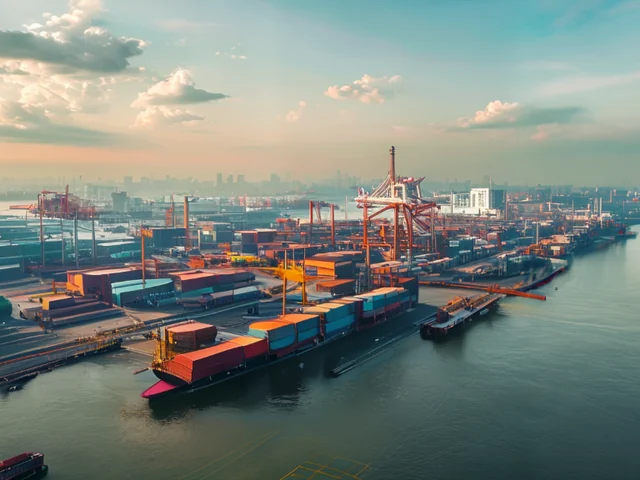
This influx of goods signals a broader shift in how international markets interact with East Asian production hubs.
The Korea 1 trillion export impact reshapes how nations approach resource security and technological procurement. As export volumes reach unprecedented levels, the global impact of Korea trade forces other manufacturing powers to adjust their domestic policies and trade agreements.
This milestone necessitates a closer look at how specialized components move through the world economy. The Korea 1 trillion dollar trade creates a new baseline for assessing the economic stability of the region.
Consequently, the Korea export milestone effect is visible in the way multinational corporations diversify their sourcing strategies to include more advanced Korean-made technologies.
I find that the second step in this transition is the most significant.
How does Korean trade impact the world? In a quiet office, an analyst rubs his tired eyes while staring at the screen, realizing how precision engineering defines the global impact of Korea trade.
An analyst sits in a quiet office, comparing shipping manifests and trade flow data on a large monitor. The screen displays a dense web of connections between Seoul and major economic centers across the Atlantic and Pacific.
The global impact of Korea trade extends beyond simple volume, influencing the standards of precision engineering and semiconductor manufacturing. When a major economy reaches this level of export capacity, it dictates the pace of innovation in secondary markets.
This phenomenon drives international competition, as other nations attempt to match the efficiency and technological depth seen in these massive export flows. The shift is not merely about quantity but about the qualitative influence on global industrial standards.
According to World Bank, the 2025 record includes 1.0%.
How can I track changes in Korea's export growth? A logistics manager walks through a vast warehouse, checking the labels on crates destined for North America and Europe. The movement of these goods follows specific, high-speed routes designed to maintain the momentum of global commerce.
Observing the Korea export growth changes requires looking at the transition from heavy industry to sophisticated digital and green technologies.
This evolution changes the composition of global trade baskets, replacing older commodity-based models with high-value intellectual property and advanced hardware.

As these exports become more integrated into the daily infrastructure of other nations, the economic interdependence between Korea and its trading partners deepens. This evolution is a core component of how modern trade ecosystems function.
- Monitor trade volume fluctuations. 2. Analyze sector-specific growth rates. 3. Evaluate global market penetration.
How does this lead to economic reform?
A policymaker reviews a series of economic reports, noting the correlation between export strength and domestic industrial shifts. The documents outline a path toward greater resilience through specialized production.
The pursuit of high-value exports often triggers a necessary Korea export economic reform to maintain competitiveness. This reform typically involves:
- Investing in research and development to secure high-tech niches. 2. Streamlining logistics and digital trade infrastructure to reduce friction. 3. Diversifying trade partners to mitigate regional economic volatility.
After completing these steps, a final check of the domestic industrial capacity ensures the nation can sustain the high-speed demands of global buyers. I observed how these structural adjustments directly correlate with the ability to meet sudden shifts in international demand.
What role does international cooperation play?
A diplomat meets with trade representatives in a conference room, discussing the alignment of regulatory frameworks. The goal is to ensure that high-tech goods can move across borders with minimal regulatory hurdles.
The scale of these exports necessitates enhanced Korea international cooperation to manage complex supply chains. This cooperation is not just about tariffs but about aligning technical standards and cybersecurity protocols.
As Korea becomes a central node in the global economy, its ability to participate in international economic reform becomes a stabilizing factor for global markets. This collaborative approach helps manage the risks associated with highly concentrated high-tech supply chains.
What are the limitations of this growth?
A researcher looks at a graph showing the relationship between export volume and domestic growth, noticing a specific deviation. The data points suggest that massive export success does not always translate to immediate domestic shifts.
While the export milestone is significant, it is subject to specific economic conditions. According to World Bank data, South Korea recorded GDP growth of 1.0% in 2025. This figure indicates that massive export achievements can exist alongside more moderate domestic growth rates.

The primary limitation is that export-driven success is highly sensitive to global demand fluctuations and geopolitical tensions, which can impact the stability of the trillion-dollar threshold.
- The impact of Korea's 1 trillion export manifests as a significant reconfiguration of international trade dependencies and technological standards.
- This milestone serves as a catalyst for shifting global supply chains, fostering new economic partnerships, and accelerating high-tech industrial competition.
- A trader in a busy metropolitan port watches a massive container ship dock, marking the arrival of high-value electronic components.
This part also covers Global trade shifts by Korea.
Comments 0