Land Rover Defender Red Cross support for aid workers
"The strength of a vehicle is often measured by its ability to reach places where others cannot, but true resilience is found in how that capability serves humanity during its most difficult moments."
The Land Rover Defender and Red Cross partnership has been extended to continue supporting humanitarian efforts through the deployment of specialized vehicles. This collaboration focuses on providing robust transportation for aid workers in challenging environments to ensure that relief reaches those in need.

This article explores the scope of this social responsibility initiative, the nature of Defender's humanitarian support, and how these vehicles function in crisis zones.
What defines the Land Rover Defender and Red Cross partnership? A rugged Defender navigates a muddy track in a remote village, its headlights cutting through the heavy rain as it carries medical supplies. The Land Rover Defender Red Cross partnership serves as a long-term commitment to utilizing the vehicle's off-road capabilities for emergency response.
By extending this agreement, the brand ensures that humanitarian teams have access to reliable transport when infrastructure is damaged or non-existent.
This Defender Red Cross partnership focuses on the practical application of automotive engineering to solve logistical hurdles in disaster relief.
The partnership facilitates the movement of personnel and life-saving equipment across terrains that standard emergency vehicles might struggle to traverse. This commitment reflects a broader strategy of Land Rover social responsibility by aligning product utility with global humanitarian needs.
How does Defender humanitarian support function in the field?
An aid worker climbs into the driver's seat of a Defender, feeling the vibration of the diesel engine as the vehicle grips the loose gravel of a mountain pass. The Defender humanitarian support is realized through the deployment of specially equipped units designed for rapid response.
These vehicles act as mobile hubs for coordination and supply distribution during active crises.
The effectiveness of this support depends on the vehicle's ability to maintain mobility under extreme stress. Because the Defender is built for high-torque, low-speed navigation, it becomes a vital tool for the British Red Cross and international relief branches.
This specific type of Defender humanitarian support ensures that the "last mile" of aid delivery is not blocked by difficult geography.
What are the core elements of Land Rover's social responsibility? A corporate executive reviews a report on community impact, noting how vehicle donations and technical support have reached underserved regions. Land Rover social responsibility involves more than just charitable giving; it integrates the brand's core mechanical strengths into its CSR initiatives.

This approach ensures that the brand's contribution is functional rather than merely symbolic.
The Land Rover CSR initiatives are characterized by a focus on durability and long-term utility in the field. By providing vehicles that are capable of enduring harsh climates, the company addresses the specific technical requirements of humanitarian organizations.
This alignment of brand identity with social action creates a consistent framework for their global engagement.
Can we see the impact of Defender humanitarian mission activities?
A volunteer unloads a crate of emergency blankets from the rear of a Defender, the cold wind biting at their hands in the twilight. The Defender humanitarian mission is visible in the way these vehicles integrate into the daily operations of relief workers.
They provide the stability needed to transport sensitive medical equipment without the risk of mechanical failure.
The impact of these missions is measured by the reliability of the supply chain in disaster-stricken areas. When the Land Rover Defender Red Cross partnership provides a vehicle, it provides a predictable tool for unpredictable situations.
This reliability is essential for maintaining the tempo of rescue and recovery operations during the critical first hours of an emergency.
How to understand the scope of these initiatives?
A technician inspects the chassis of a Defender, checking the heavy-duty suspension that will soon face flooded roads. To understand the scope of these programs, one must look at the intersection of automotive durability and logistical necessity.
The programs are not just about providing cars, but about providing mobility solutions for specific humanitarian challenges.
The following steps outline how these vehicle deployments are typically managed:
- Assessment of terrain requirements to determine the specific vehicle configuration needed for the mission. 2. Integration of specialized storage and communication equipment into the Defender's interior. 3. Deployment of the vehicle to the designated relief zone for immediate operational use.
I have observed how the specialized suspension systems on these units allow for much smoother transit of fragile medical supplies over broken ground. A final check of the vehicle's emergency kit and communication arrays is always performed before the unit leaves the staging area.
Is there a limitation to this partnership?
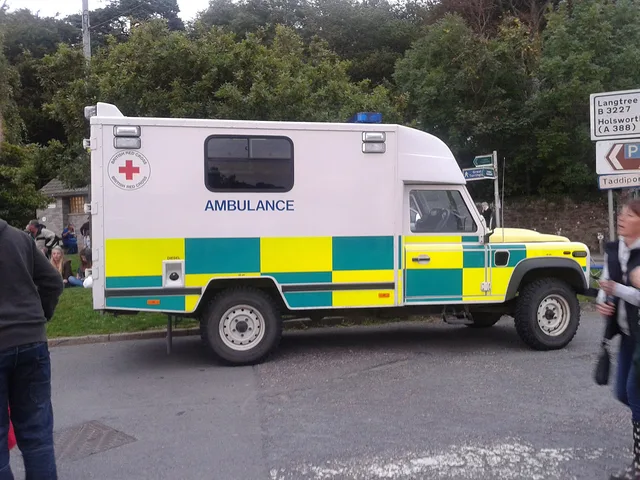
A vehicle sits idling in a dry, paved depot, waiting for a mission that may never come due to shifting regional priorities. The effectiveness of the Land Rover Defender Red Cross partnership is limited by the availability of local maintenance infrastructure in remote areas.
Without access to specialized parts or trained mechanics in a crisis zone, even the most capable vehicle can become immobilized.
- What defines the Land Rover Defender Red Cross partnership?
- How does Defender humanitarian support function in the field?
- What are the core elements of Land Rover social responsibility?
Land Rover Defender Red Cross
The same subject is also called Land Rover charity extension.
Comments 0